Transient Labs
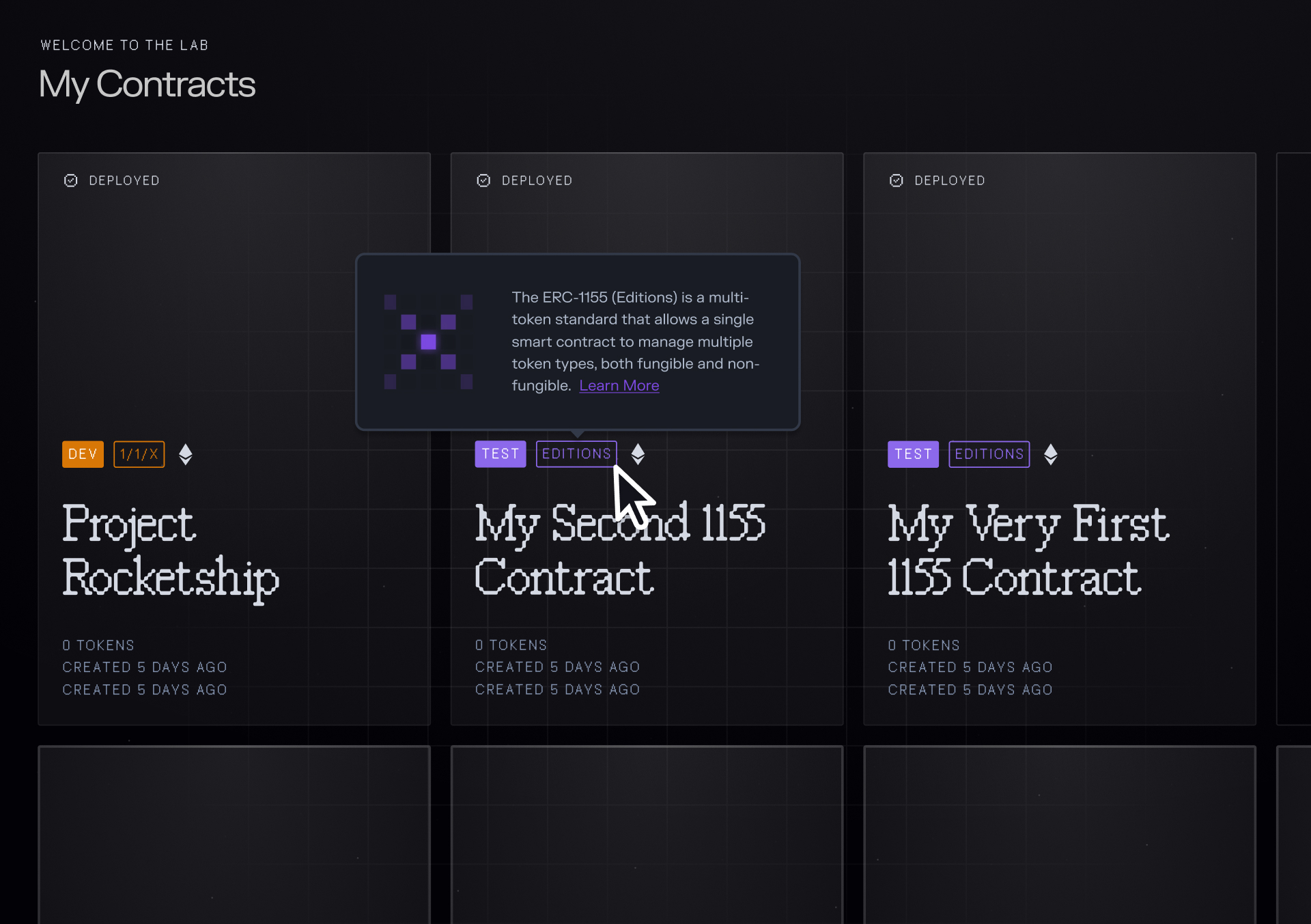
The Problem (Platform-Level)
The Lab is Transient Labs’ core revenue-driving product—the place where artists created contracts, minted work, and sold on-chain.
While technically powerful, it had become a bottleneck to growth:
- First-time artists dropped off before completing contract creation
- Returning artists recreated contracts unnecessarily, increasing system complexity and support burden
- Contract capabilities were underutilized because users didn’t understand what they enabled
- Mobile usage was increasing, but the experience wasn’t viable on smaller screens
At a platform level, this wasn’t a UX issue, it was a growth, efficiency, and adoption risk. If artists couldn’t confidently create and reuse contracts, the ecosystem couldn’t scale.
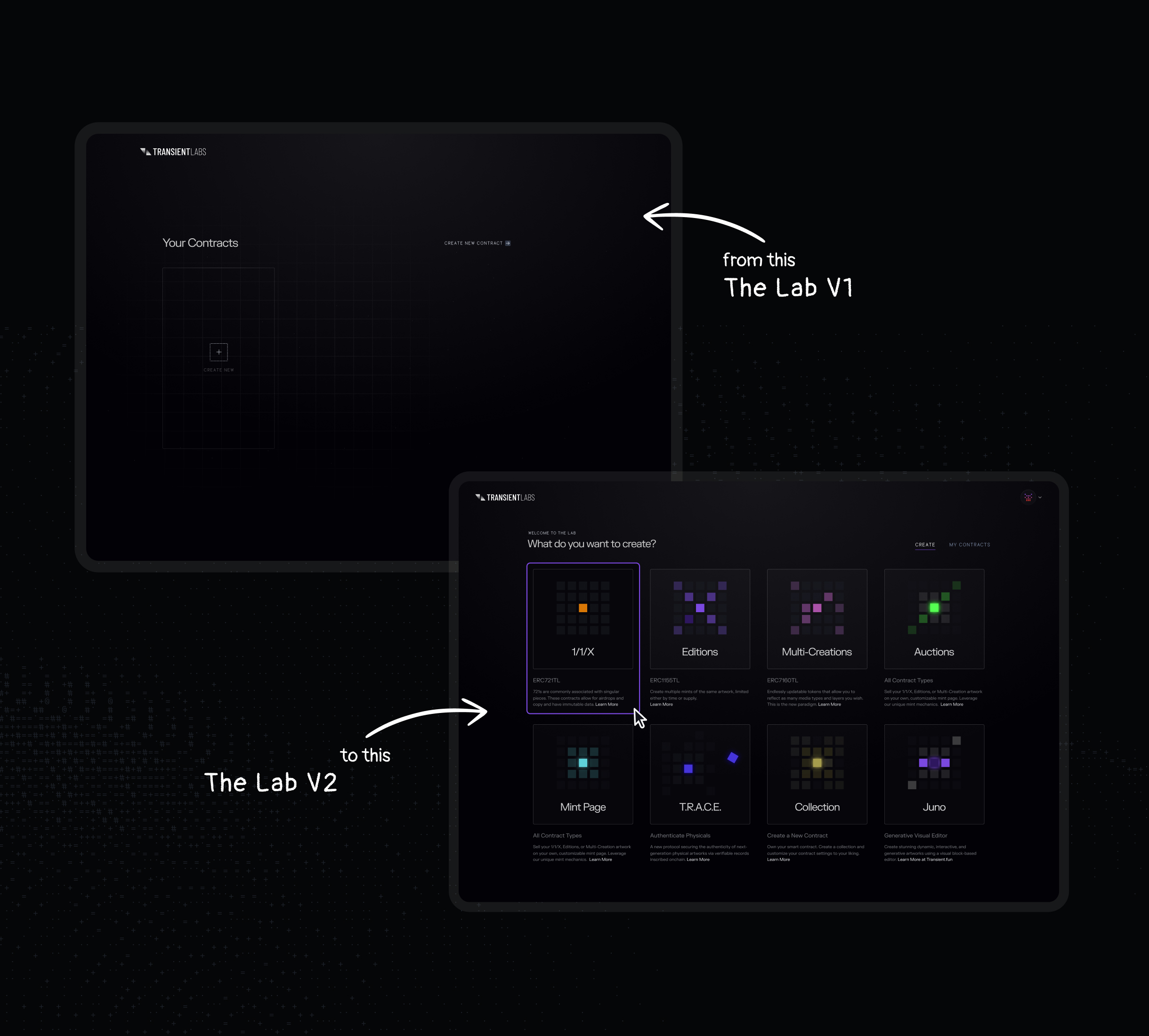
The Goal (Business Outcomes)
Re-architect The Lab to function as a scalable creation platform, not just a set of tools, but one that:
- Increased successful contract creation (activation)
- Reduced redundant contract deployments (cost + complexity)
- Enabled artists to self-serve without support intervention
- Supported future products (Auctions, Mint Pages, Juno) without redesigning core flows
Explorations
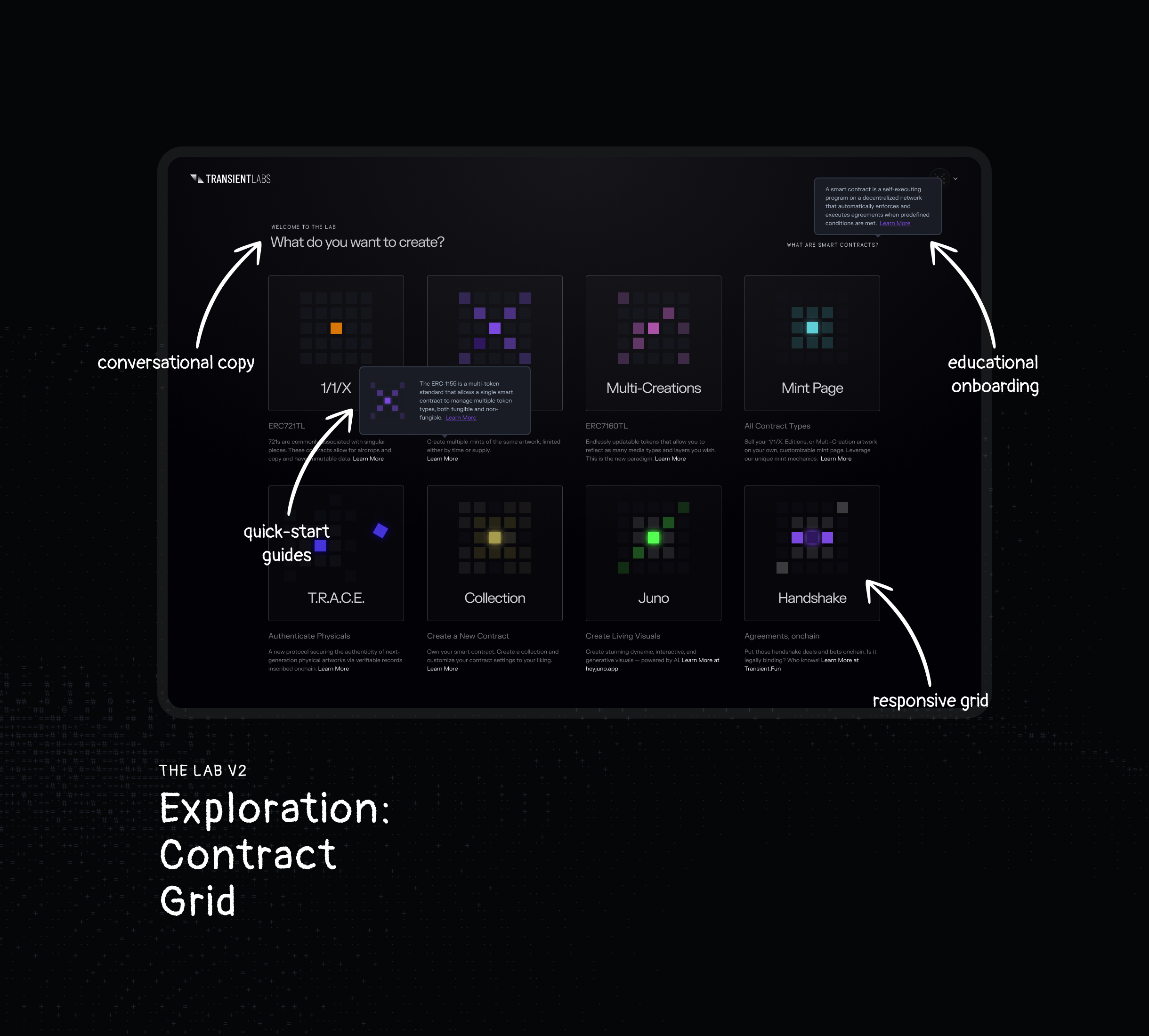
What I Led (High-Leverage Decisions)
Rather than incremental UI tweaks, I focused on a few structural decisions that unlocked platform-level impact:
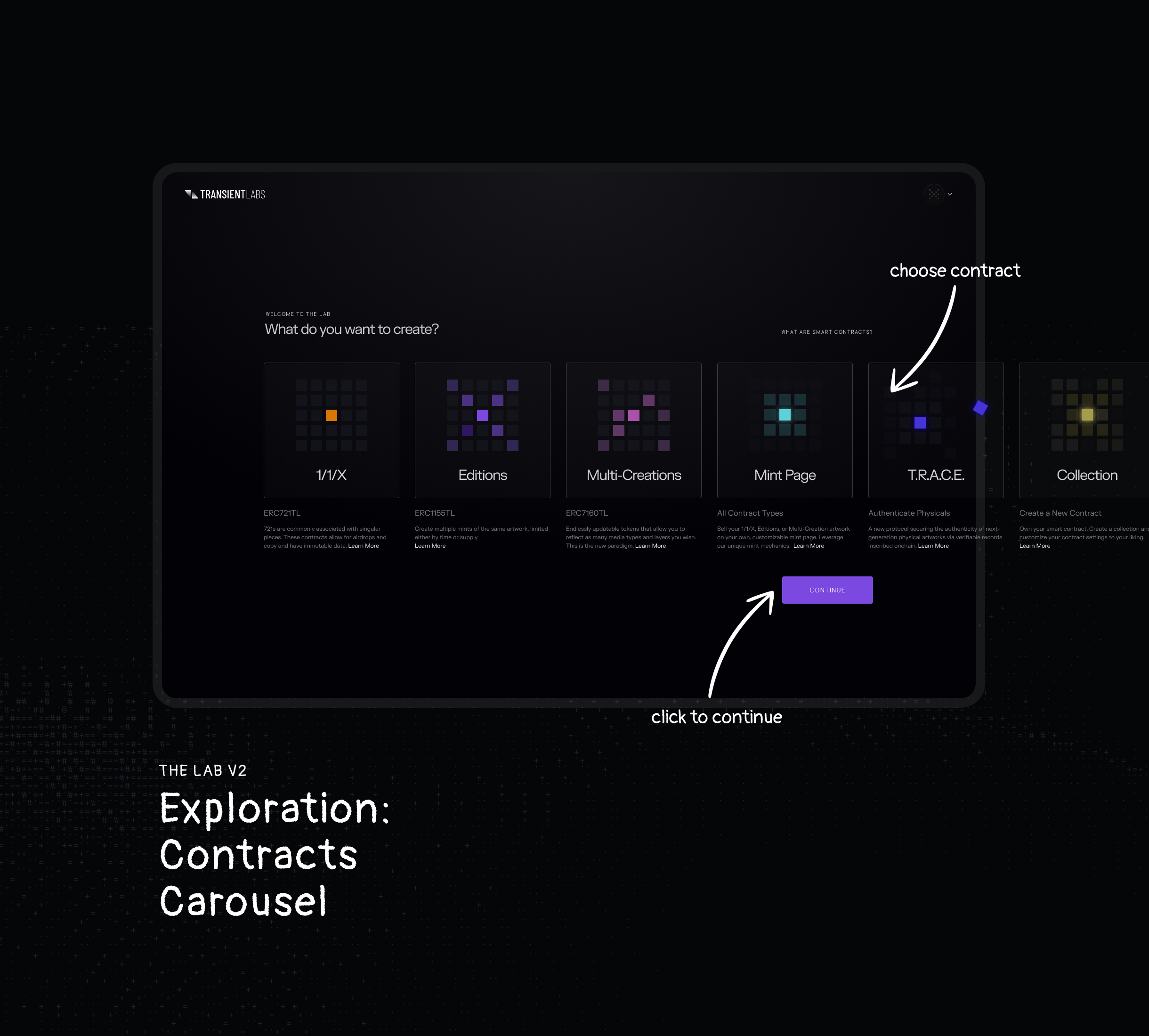
1. Contracts as First-Class, Visual Entities
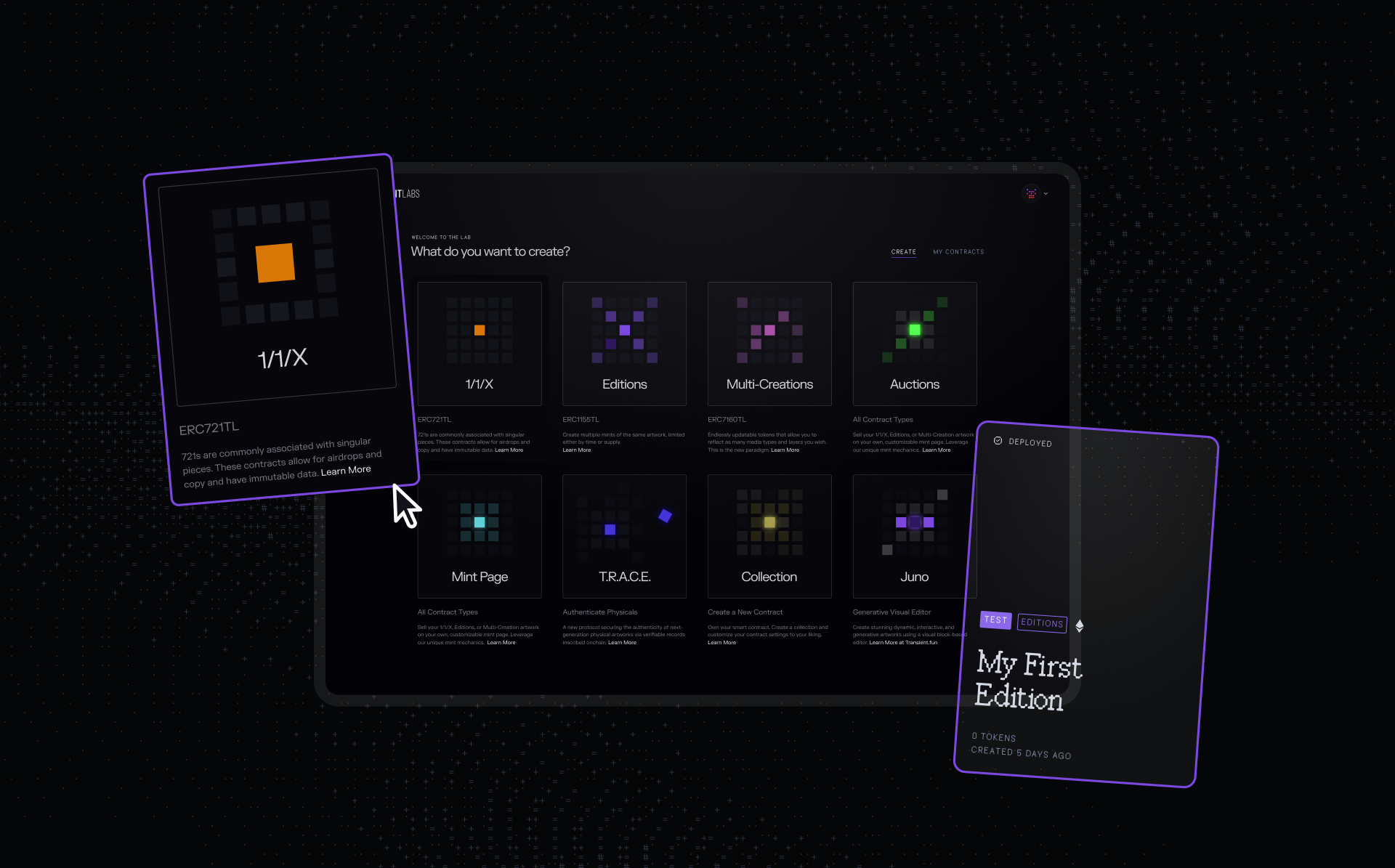
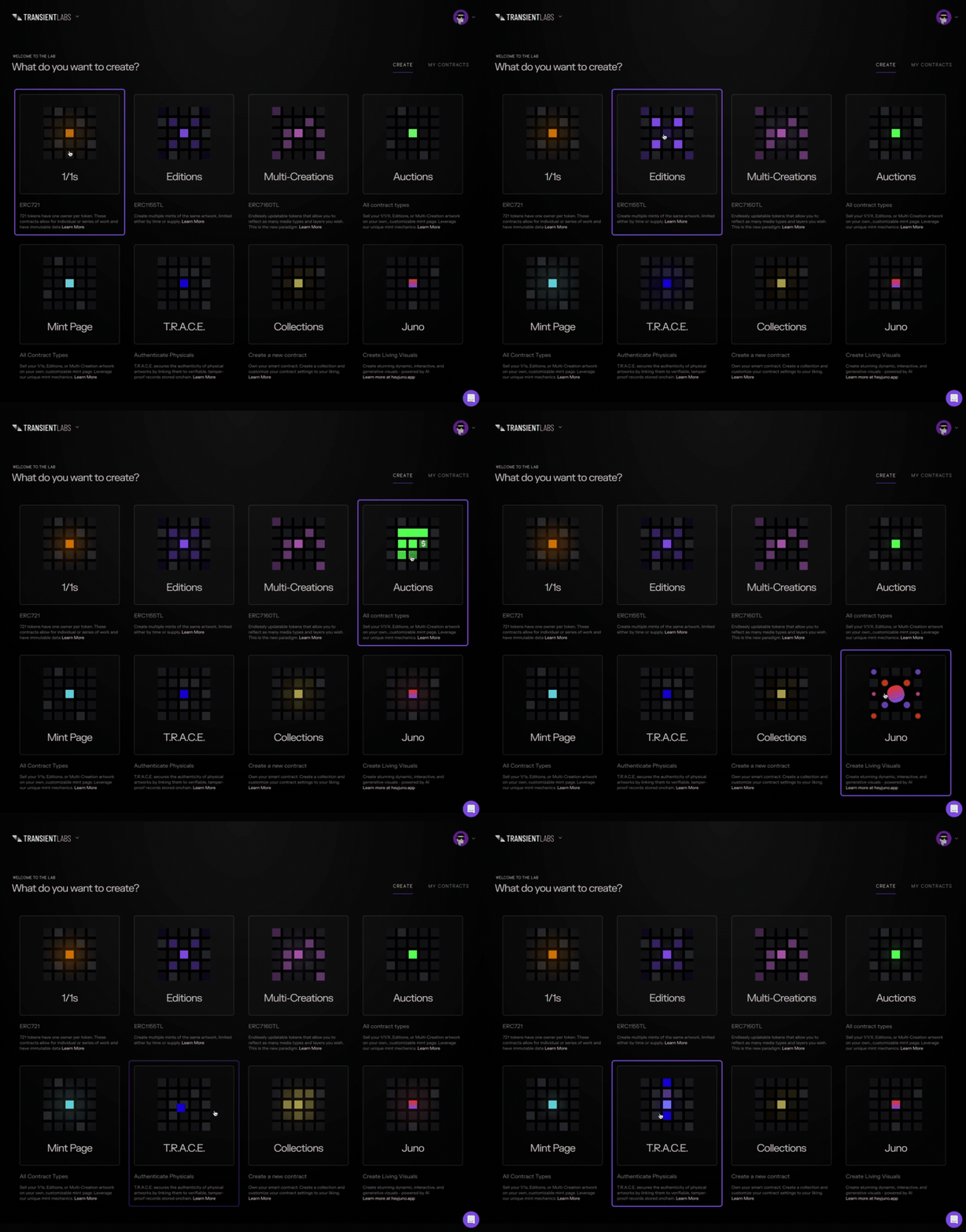
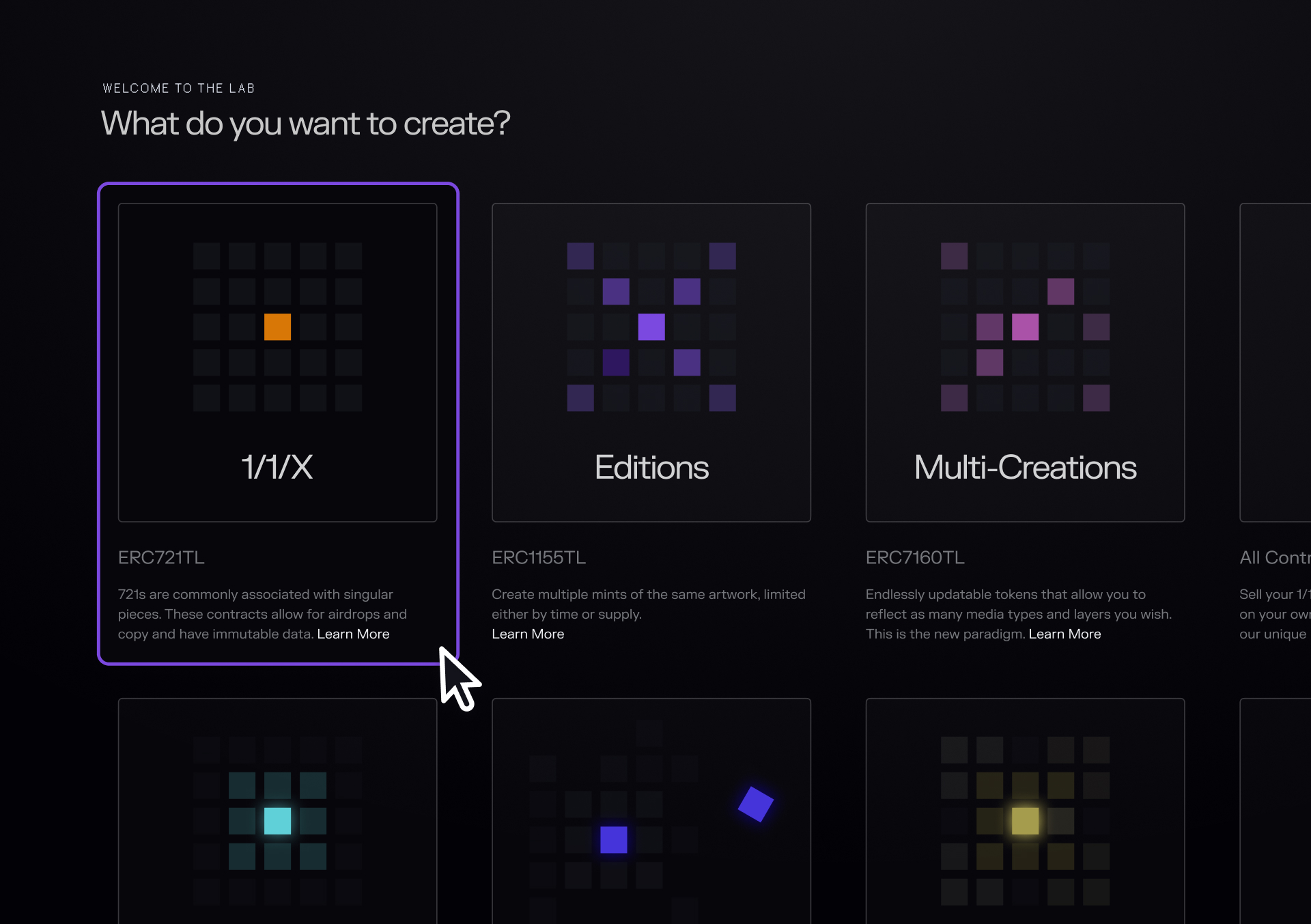
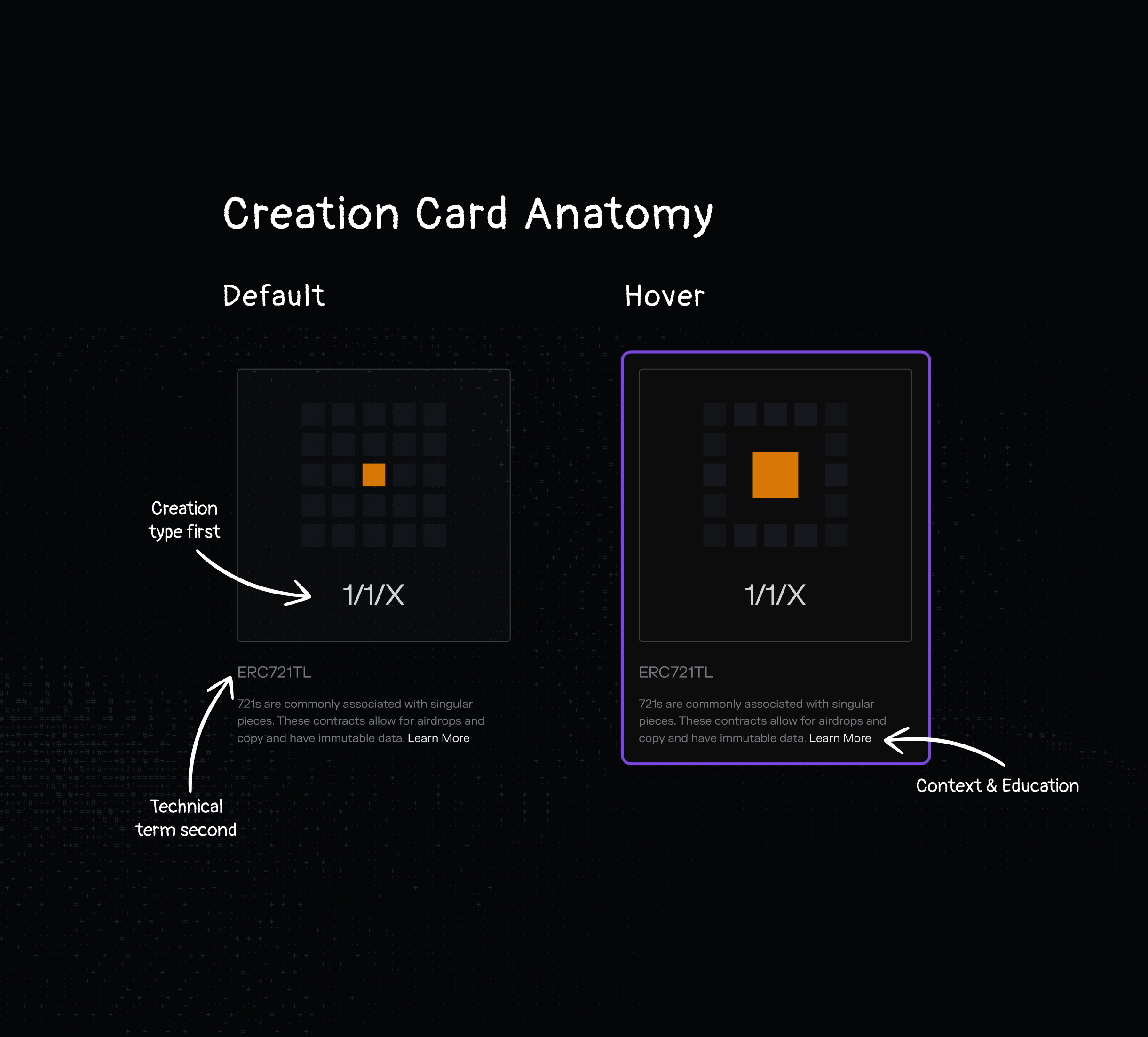
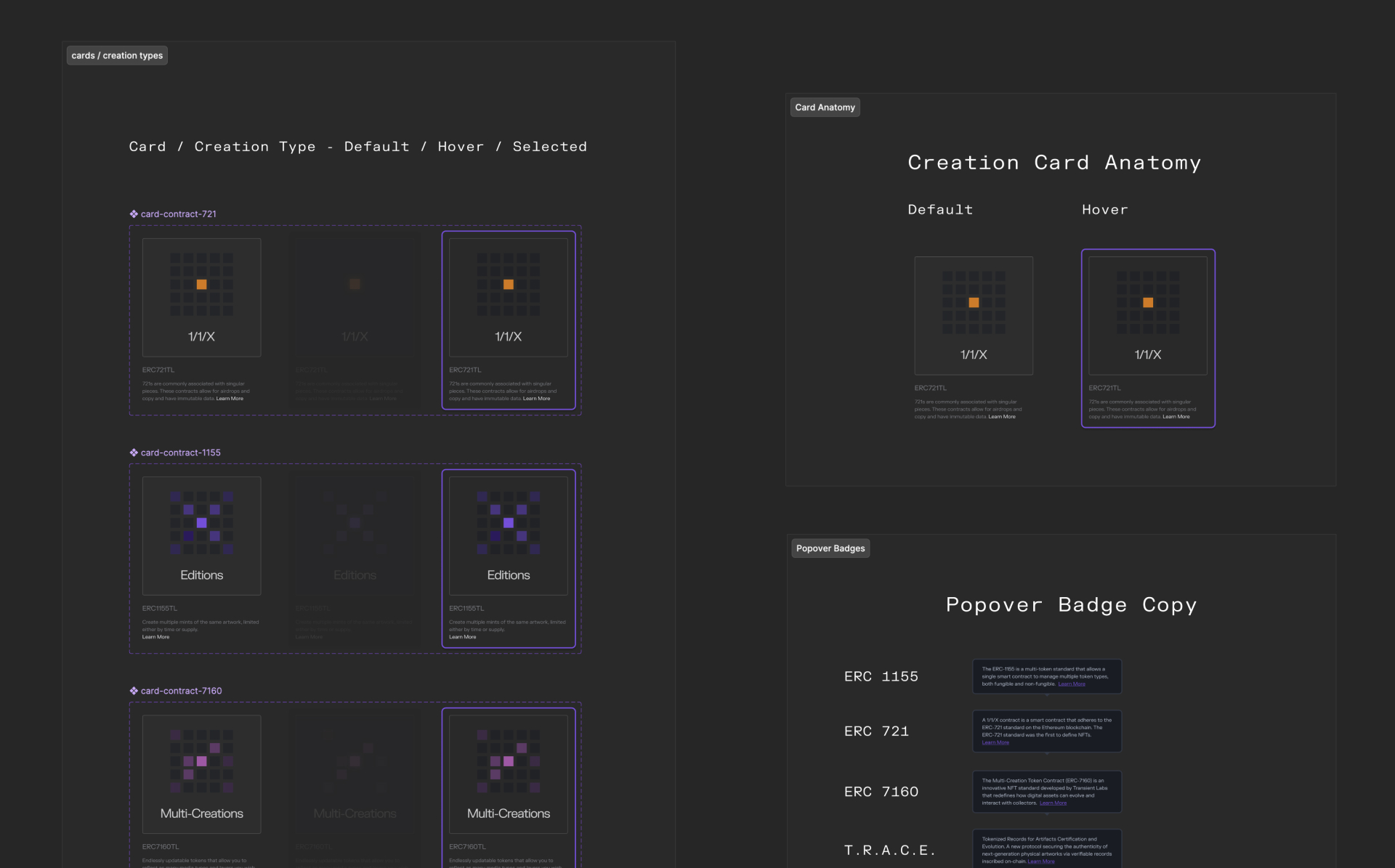
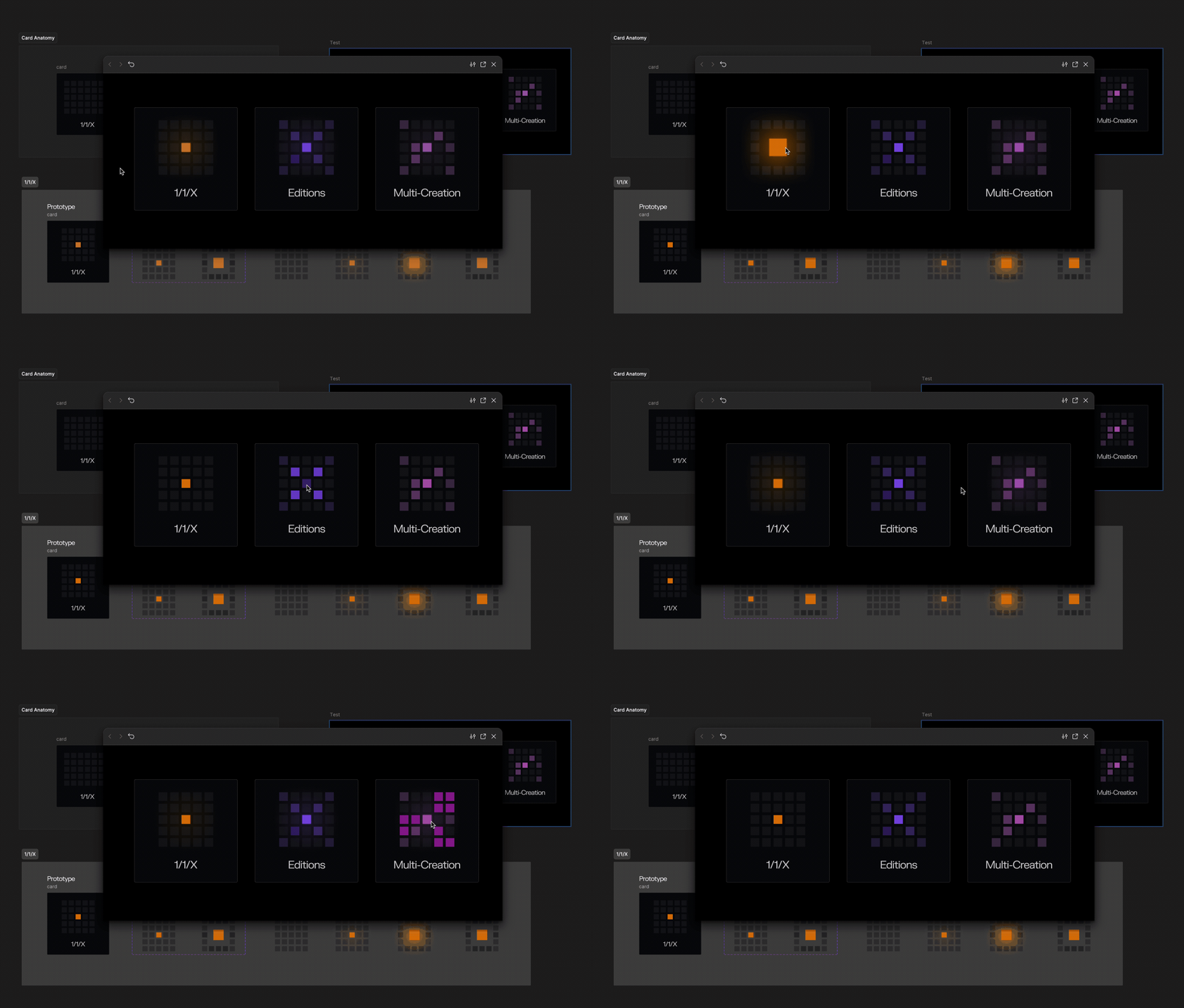
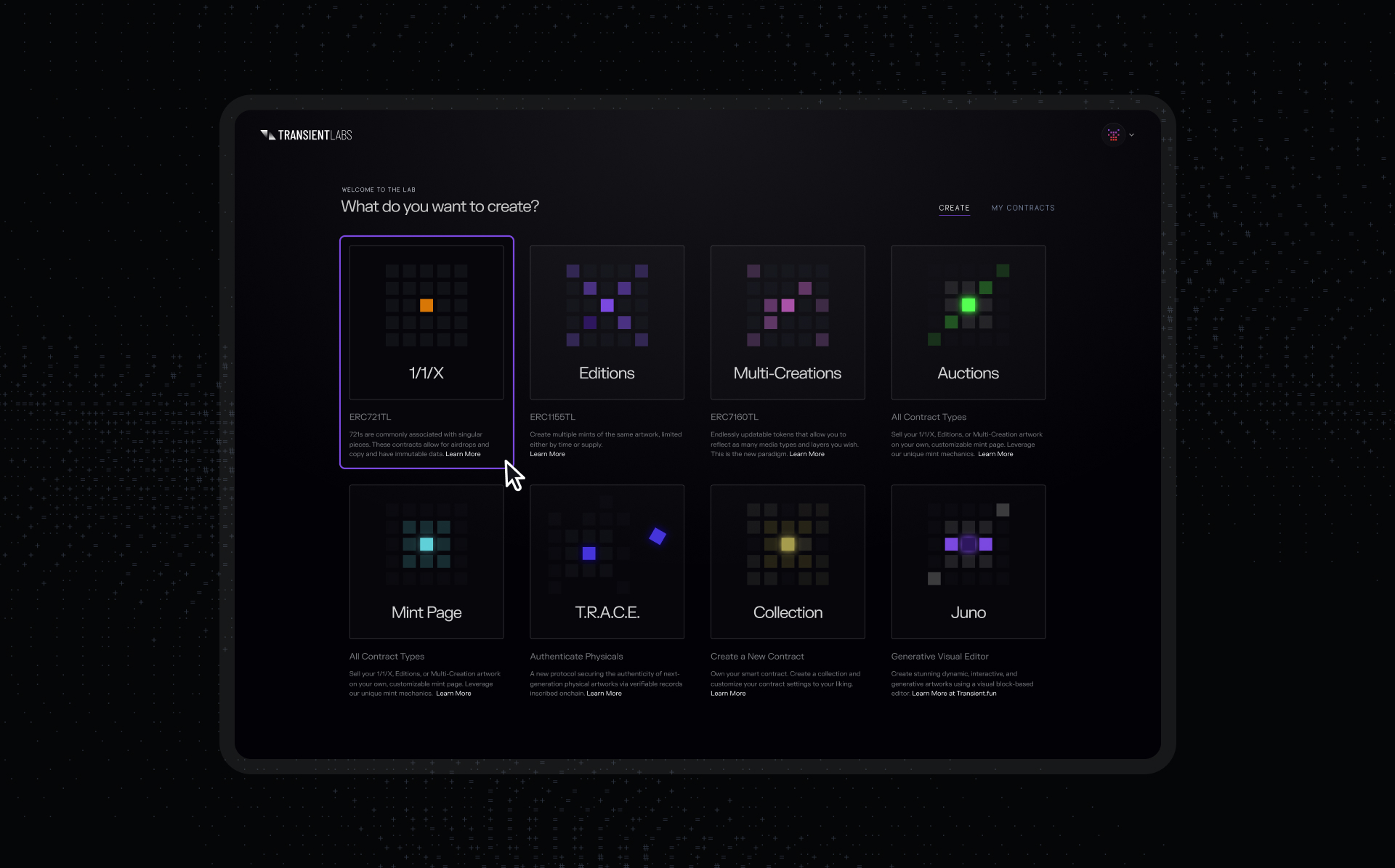
I moved contract selection out of hidden form fields and into a visual, animated system of contract “cards.”
Each contract gained:
- A clear identity (iconography + motion)
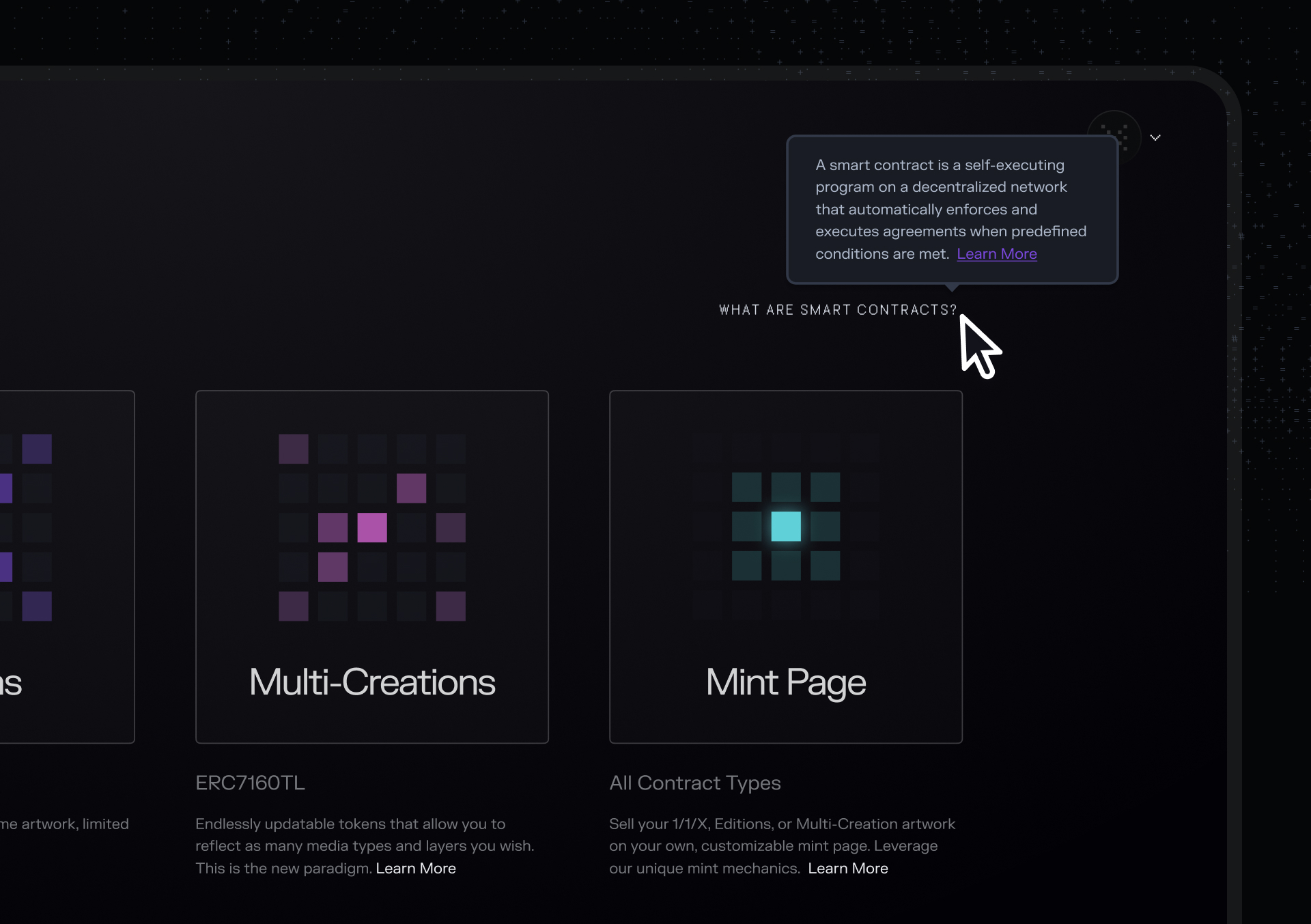
- A concise explanation of what it enables
- Embedded education and examples
This reframed contracts from technical objects into creative pathways, dramatically improving comprehension and confidence.
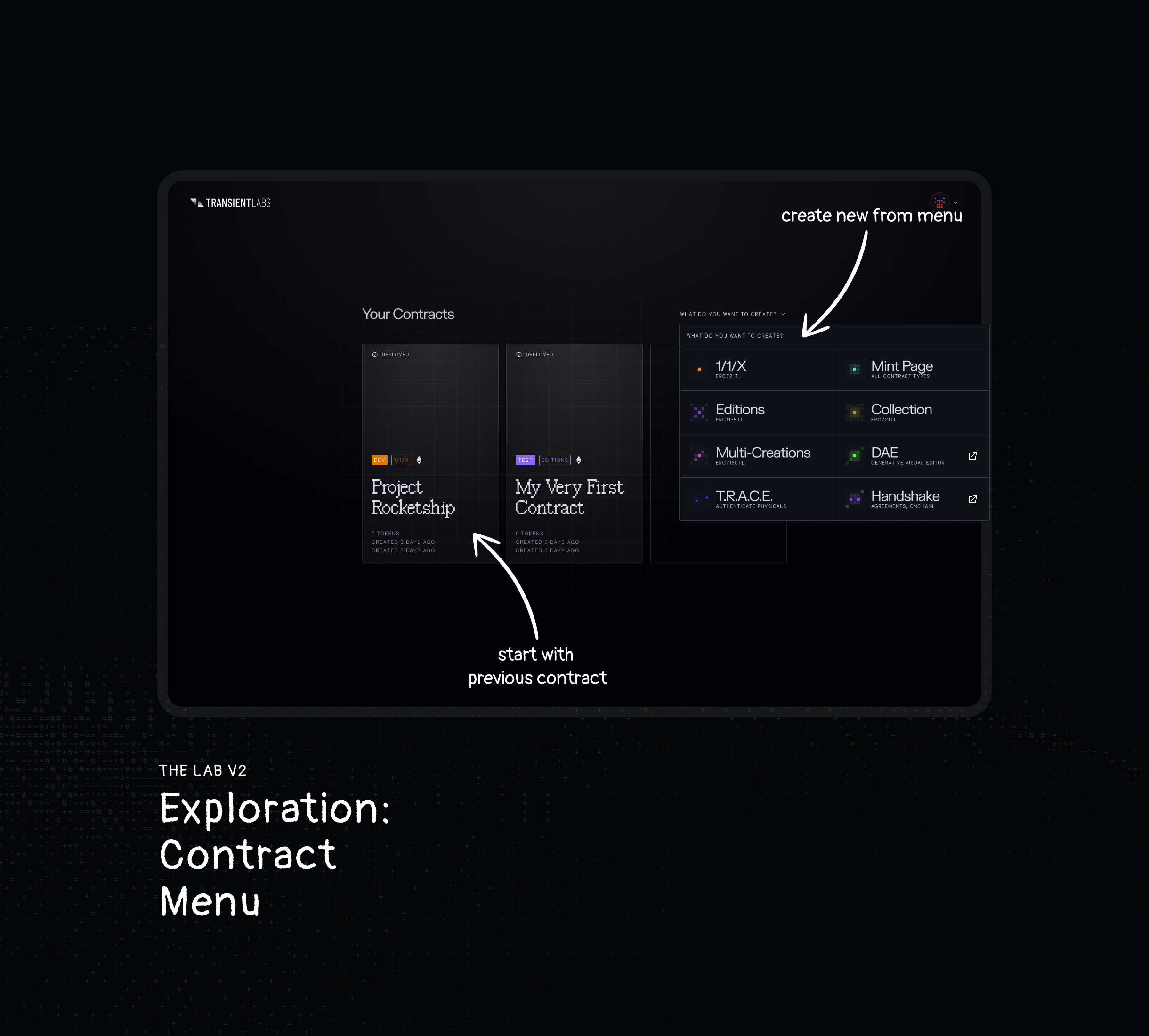
2. Dual-Path Architecture for New vs. Returning Artists
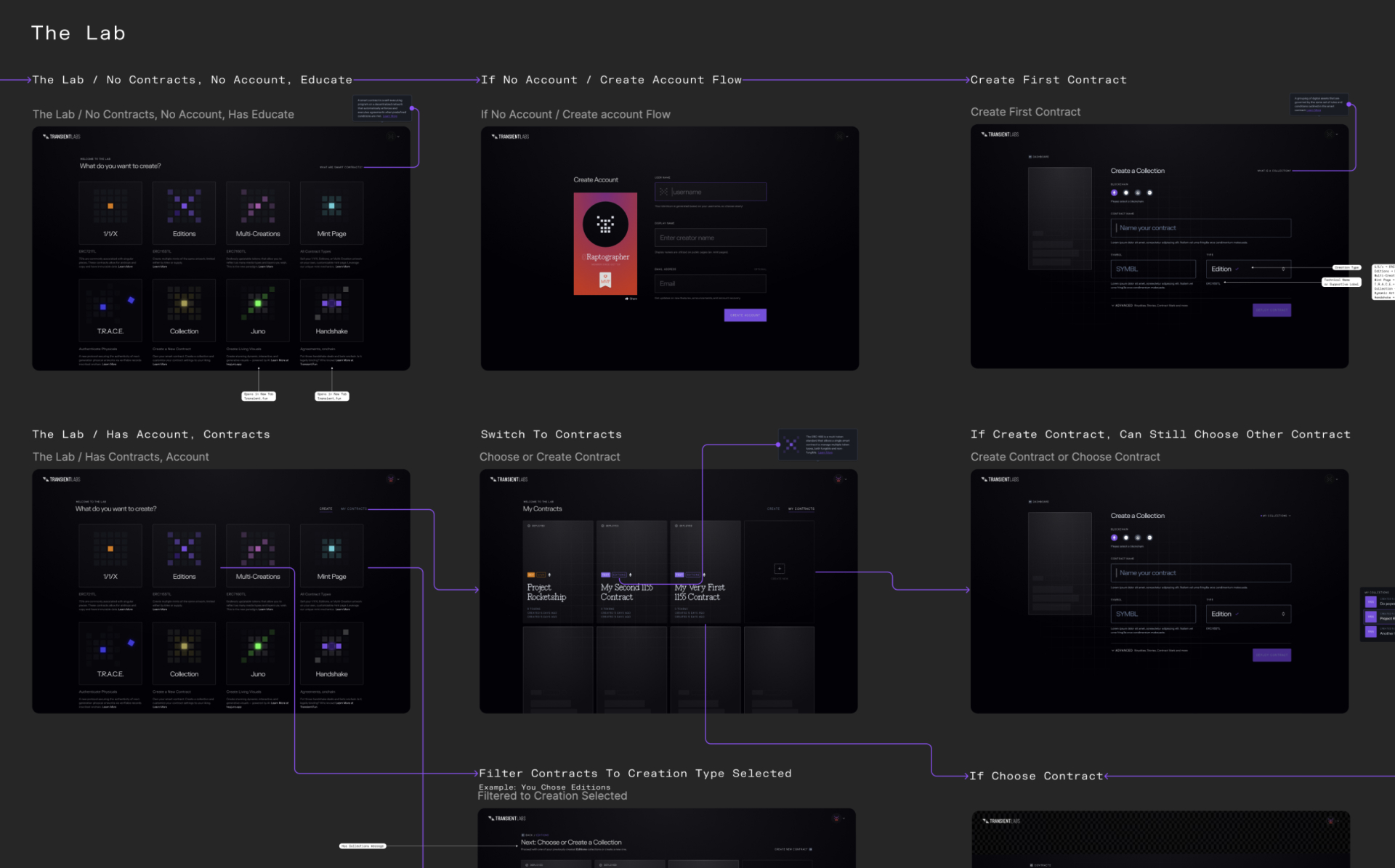
I redesigned the core flows to explicitly support two user modes:
- New artists: guided education, progressive disclosure, reassurance moments
- Returning artists: immediate access to existing contracts and prior mints
This reduced redundant contract creation, improved re-engagement, and simplified long-term system maintenance.
3. Platform-Ready Motion System (Figma → Rive)
I established a lightweight motion system using Rive, enabling animated contract states to ship directly in production.
This wasn’t decorative, it became a reusable pattern for:
- Feedback
- Status
- System affordances
Engineering adopted this pattern across features, reducing custom animation work going forward.
4. Mobile as a First-Class Constraint
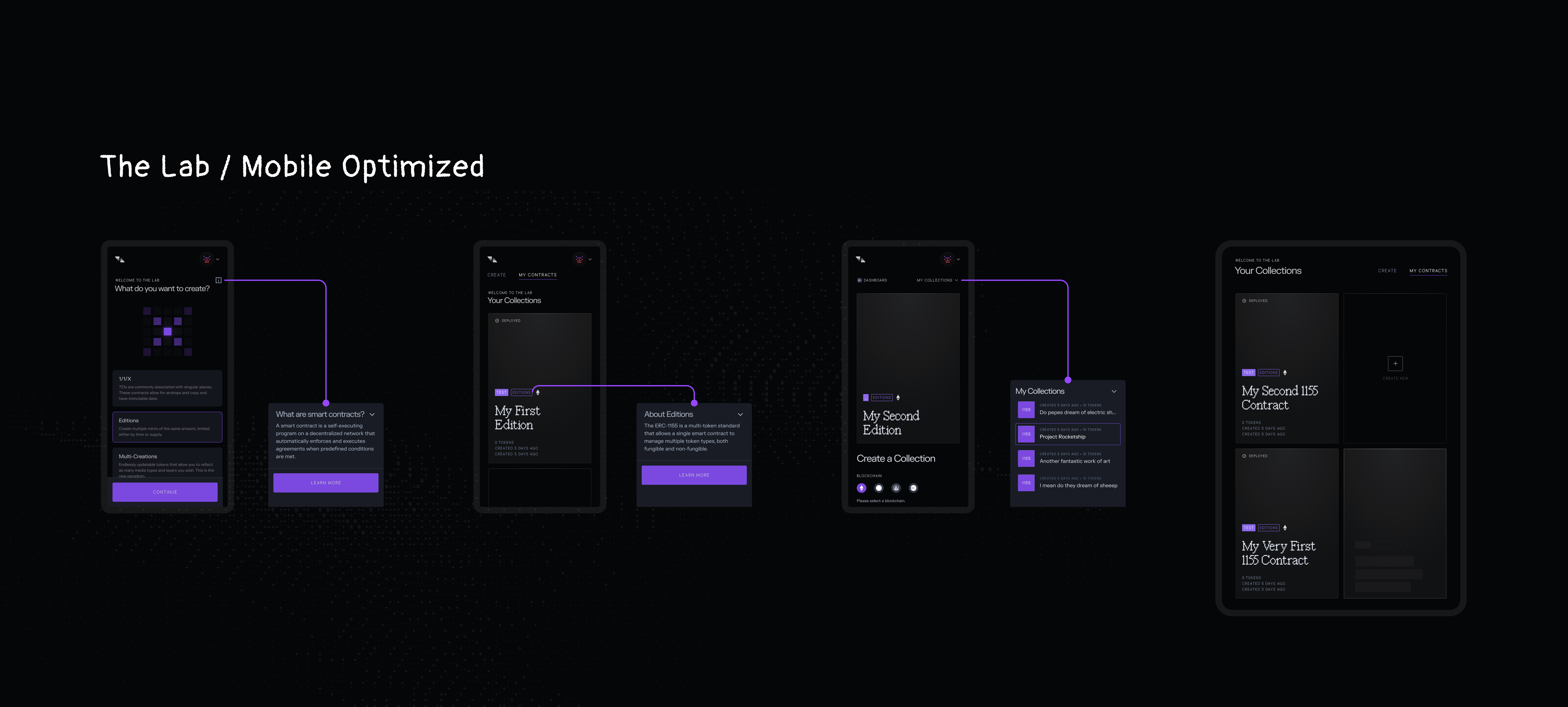
I restructured layouts and components (grids, sheets, drawers) so contract creation, minting, and management worked fully on mobile—unlocking usage that previously stalled mid-flow.
The Impact (What Changed)
- +40% increase in successful contract creation (activation)
- Fewer duplicate contracts, reducing system complexity and artist confusion
- Higher mobile completion rates, expanding when and how artists could create
- Enabled successful launches of Auctions, Mint Pages, and future experiments without reworking the foundation
Internally, The Lab shifted from a fragile, feature-specific UI to a platform system other teams could build on with confidence.
United Masters Wallet

